
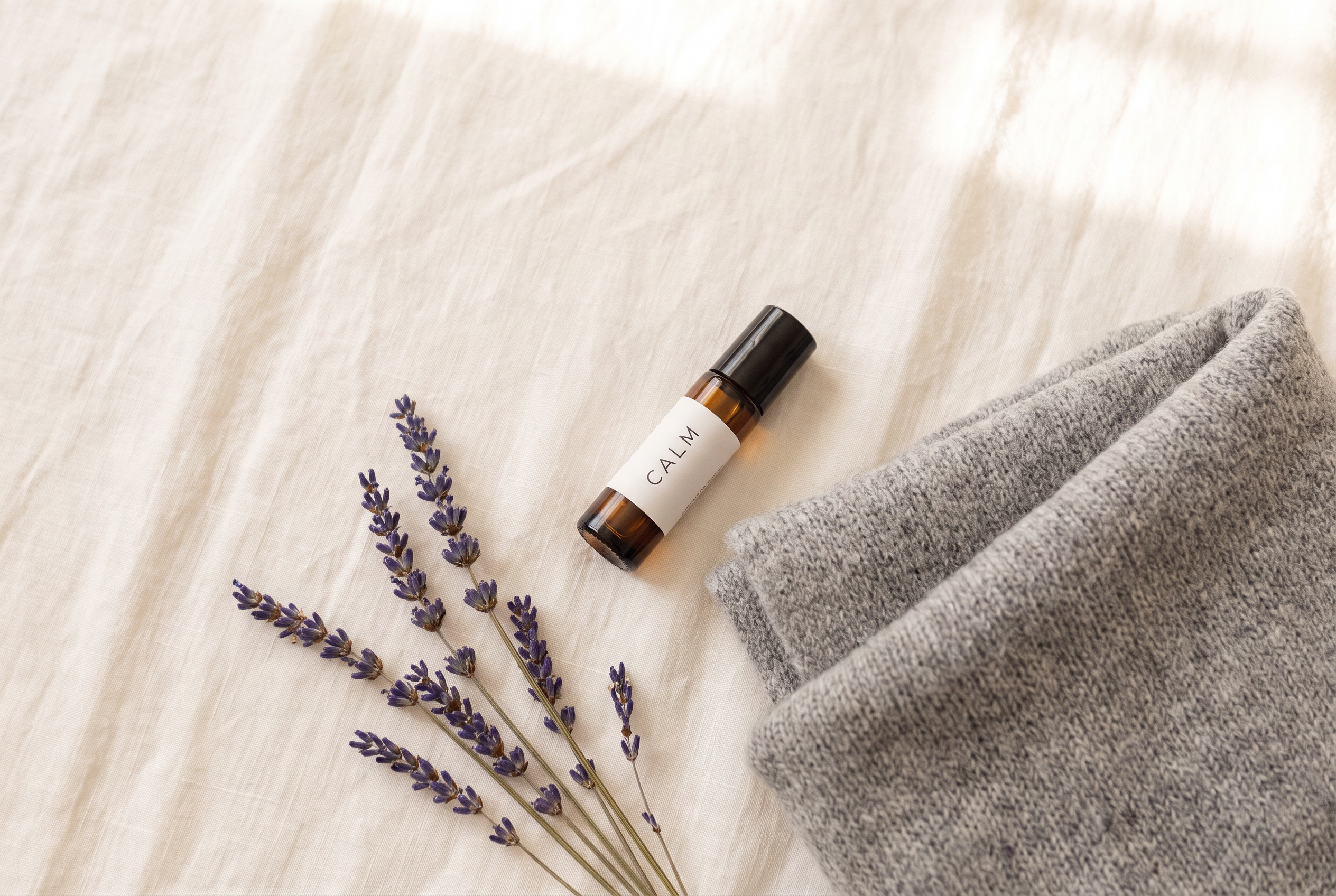
Stress is the body's ordinary response to pressure. It is useful in short bursts and wearing when it lingers — and scent is one of the oldest, simplest ways people have used to take the edge off.
When an aroma is inhaled, scent molecules reach the olfactory system and, through it, the parts of the brain tied to mood and memory. This is why a familiar smell can settle you before you have thought about why. Aromatherapy puts that effect to deliberate use, with oils chosen for their calming character.
Oils most often reached for
Lavender is the usual starting point — soft, clean and widely regarded for easing tension. Bergamot brings a bright citrus lift; Roman chamomile is gentle and settling; frankincense is warm and grounding, and slows the breath almost on its own. Clary sage, sandalwood, ylang ylang and sweet orange all belong in the same calm family.
Simple ways to use them
The easiest method is to inhale. Put a drop or two on a tissue and breathe, or add a few drops to a bowl of steaming water. A diffuser spreads the scent gently through a room over time — three or four drops is plenty.
For the skin, dilute first. Blend a few drops into a tablespoon of carrier oil such as sweet almond or grapeseed, and massage into the neck, shoulders or wrists. A warm bath with a well-diluted blend does much the same work at the end of a long day.
A calming blend to begin with
Try three drops lavender, two bergamot and one frankincense in a diffuser, or the same ratio in a tablespoon of carrier oil for the skin. Start with fewer drops than you think you need — you can always add more, and a lighter touch is usually the more pleasant one.
Aromatherapy is a support, not a treatment for serious or persistent stress. If low mood or anxiety is affecting your daily life, speak to a doctor.